
Stinkin Lincoln
By Silas Creed · Filed under The Creed Papers
I was no longer a boy when I first met Abraham Lincoln, though some men still chose to treat me as one rather than ask how I had come to be in the rooms where they conducted the future. I was passing through Springfield in the early 1850s and attended the reception because I had heard Lincoln speak and wanted to assess the man in person. By then I had taken to wearing a tall black hat, sturdy, plain, and built more for purpose than appearance. I kept my notes inside it, folded tight against the lining, along with small bits of wire and paper that seemed worth carrying. It kept the weather off and my thoughts in order. That was reason enough.
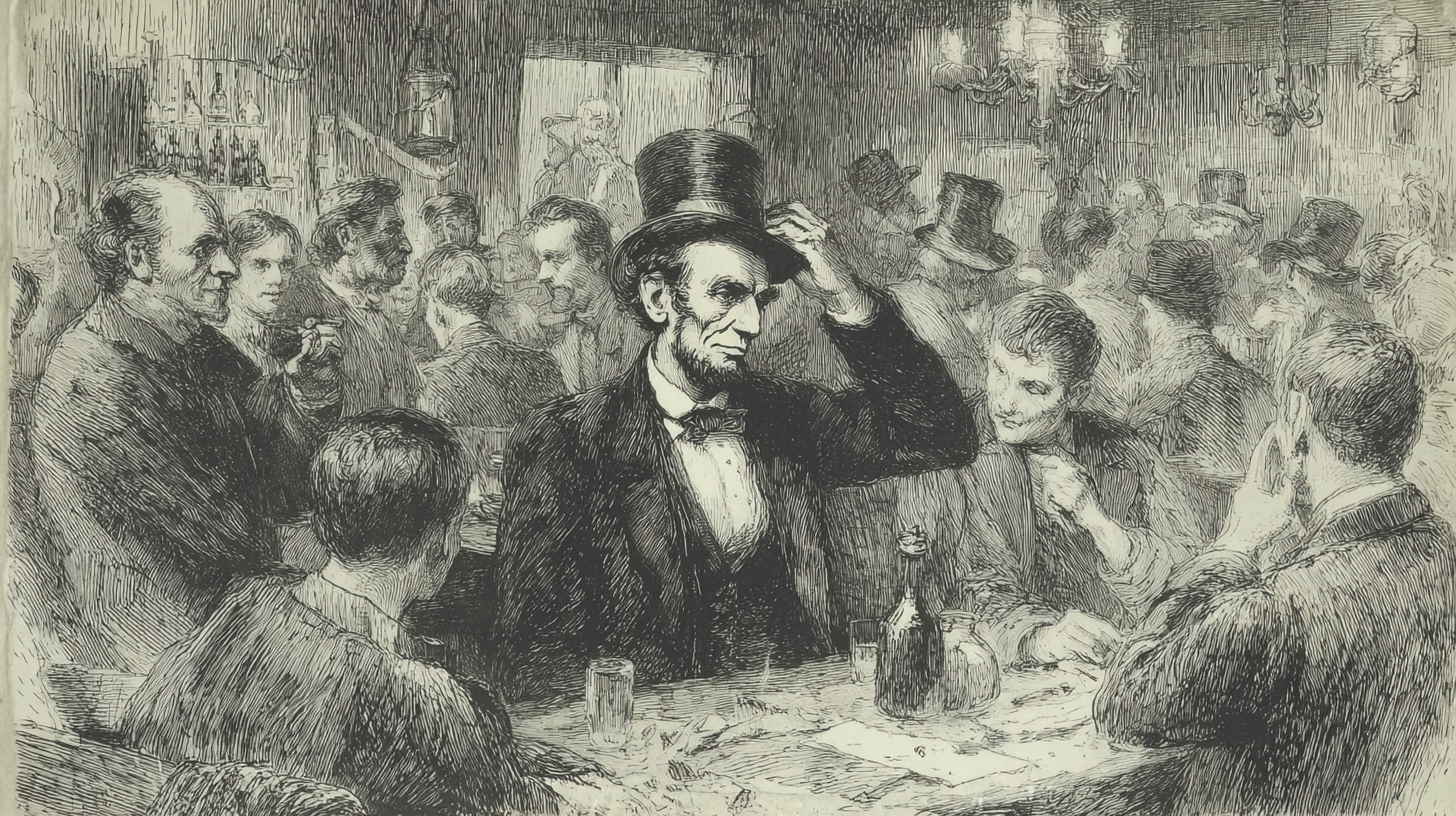
I remember the room well enough. A crowded place in Springfield, full of men talking louder than they needed to, each convinced the future might be settled over a table and a glass. Lincoln stood out even before he spoke, taller than the rest, but not in a way that demanded attention. He watched people. That was the first thing I noticed about him. Not what they said, but how they said it, and why. At some point his attention found its way to me, or more accurately, to the hat sitting beside me.
He picked it up without ceremony, turned it in his hands, and asked what use a boy had for such a thing. I told him the truth: it held what I needed and kept me from losing it. He seemed to consider that longer than the answer required. Then he set it on his own head, as if only to see how it fit. It suited him immediately. The height of it matched him, balanced him in a way that made the rest of the room feel slightly smaller. I could see him noticing it as well, though he said nothing of it directly.
We spoke a while after that, though I could not tell you now exactly what passed between us. He had a way of following a thought to its end, even if it took him through three others first. I liked that. At some point he began placing his papers inside the hat without thinking much of it, as though the habit had always been there waiting for him. I remember watching that more than anything else, not the words, but the way a small idea settles into place when it finds the right person.
When the evening broke apart and men drifted back into the dark, he walked out still wearing it. I did not call after him. There was no need. Some things are not taken so much as they are carried forward. I stepped outside a little later, and he was already gone into the night, hat and all. It seemed to me then that it fit him better than it ever had me. I have found over the years that usefulness tends to choose its owner that way. I never saw the point in arguing with it.